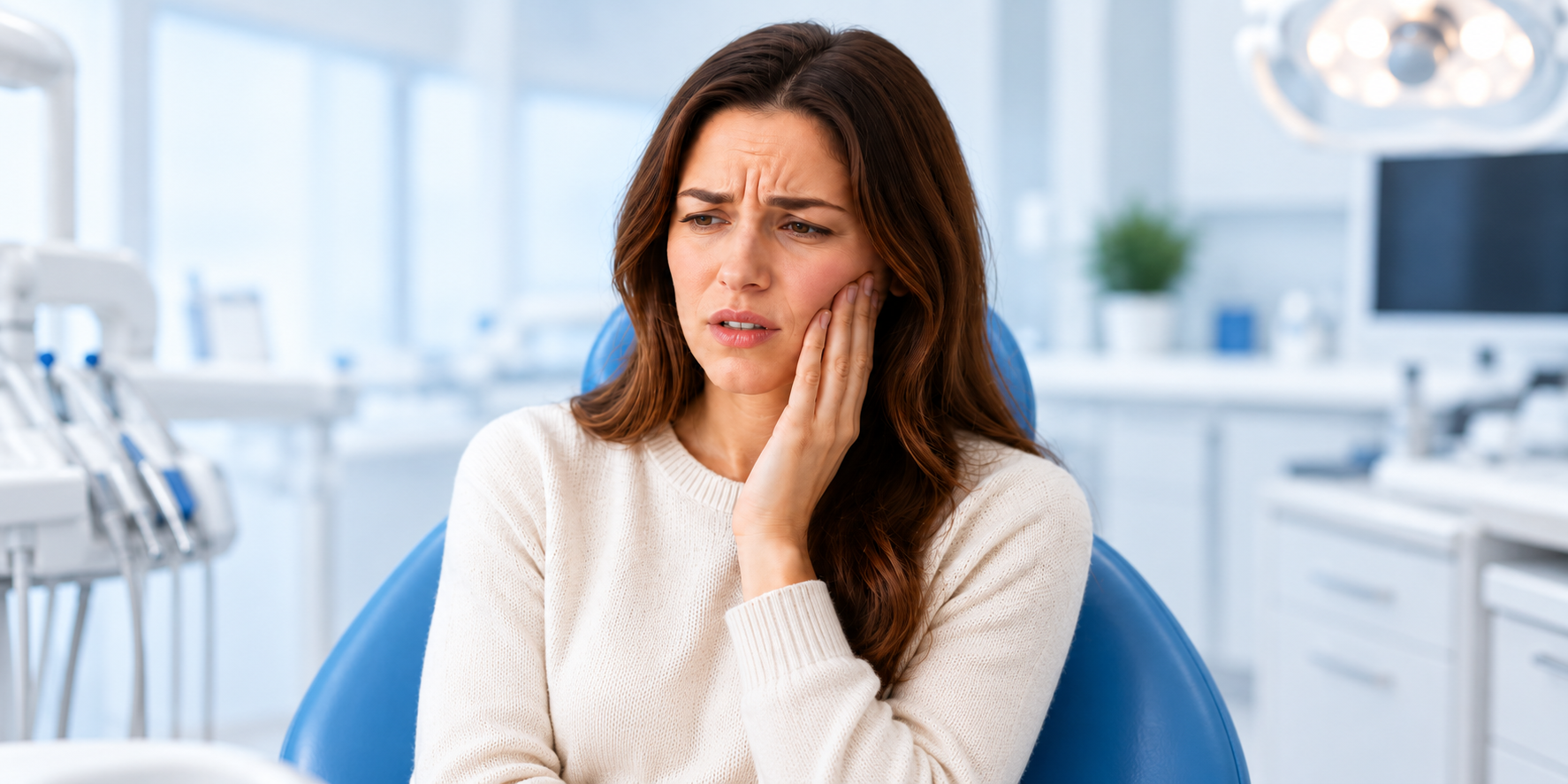
Ask people what they dislike most about going to the dentist and you will usually hear one of two answers. The needle, or the drill.
It is a fair reaction. The freezing needle is uncomfortable in the moment, and then you spend the rest of the afternoon with a numb lip, talking sideways and avoiding hot coffee. The drill brings its own problem, that high whine and the vibration you feel in your jaw more than you hear in your ears.
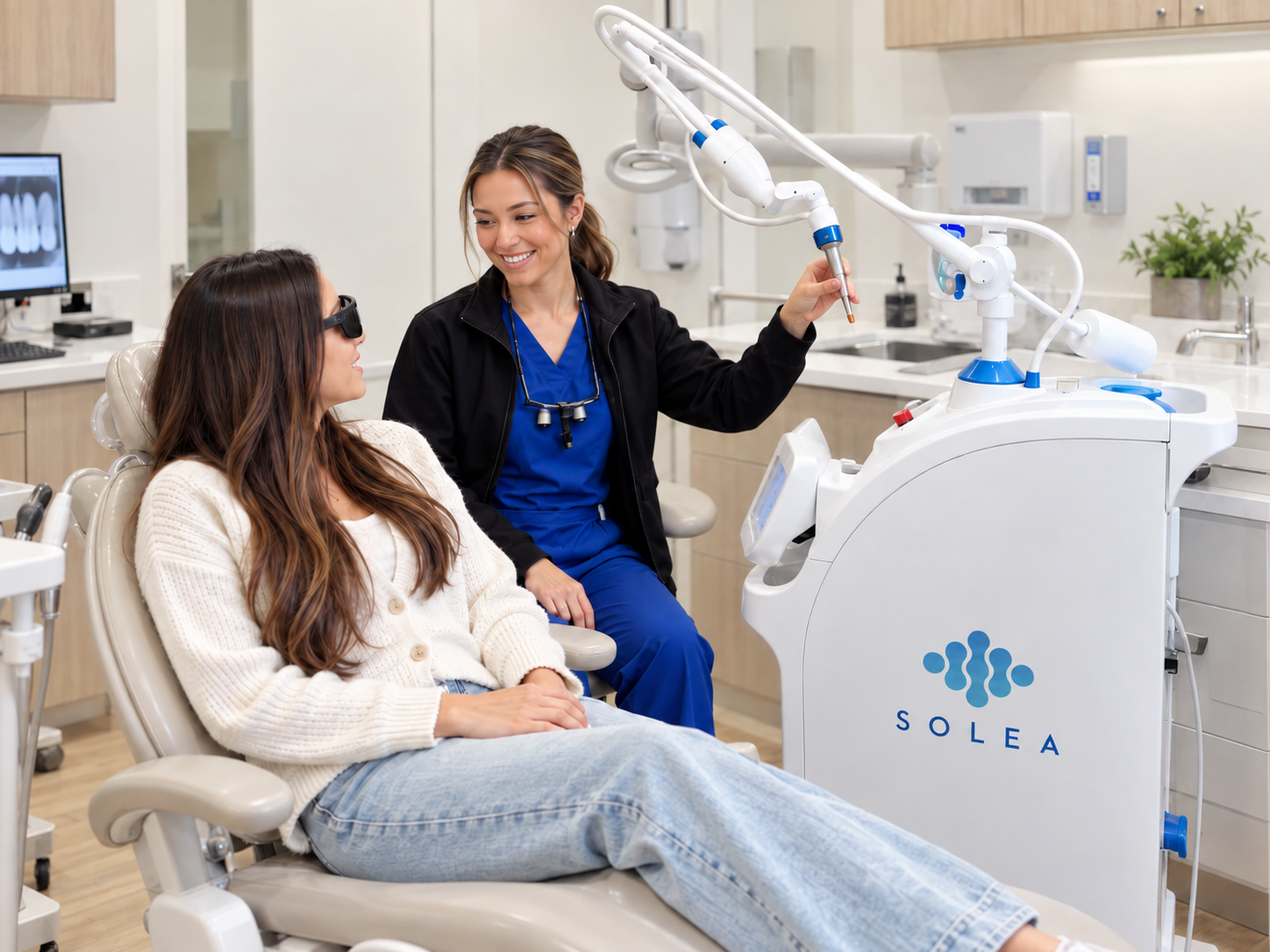
At Eastside Family Dentistry, a lot of routine treatment no longer involves either one. Dr. Jan uses a Solea laser, and for many patients it means walking in with a cavity, walking out with it filled, and heading straight back to work with full feeling in your face.
Here is what the technology actually does, who it suits, and what a visit looks like.
What the Solea laser is
Solea is a CO2 dental laser that runs at a 9.3 micron wavelength. That number matters more than it sounds like it should.
Tooth enamel is largely mineral, and at this particular wavelength the laser energy is absorbed almost perfectly by that mineral structure. It removes decay in very small, controlled increments rather than grinding through the tooth. Because there is no spinning bur touching the tooth, there is no vibration and no pressure, and the sound is a soft hiss rather than a whine.
The same laser also works on gum tissue and bone, which is why it handles a wide range of procedures rather than just fillings.
The key point for anxious patients is this. Most of the discomfort in traditional cavity treatment comes from heat, pressure, and vibration reaching the nerve inside the tooth. The laser generates very little of any of them, which is why freezing is often unnecessary.

Why most patients skip the freezing
When Dr. Jan treats a cavity with Solea, the usual sequence of numbing gel, needle, and fifteen minutes of waiting for your lip to go heavy can often be skipped entirely.
Most patients report feeling a gentle puff of air and cool water spray, and not much else. Some feel a brief sensitivity, and if that happens, Dr. Jan can pause and adjust or use freezing after all. Nobody is asked to tough anything out.
Skipping anesthetic changes the whole appointment in ways that are easy to underestimate:
- No numb afternoon. You can eat lunch, drink your coffee, and talk normally right after.
- Shorter visits. Removing the wait for anesthetic to take effect cuts real time off the appointment.
- More than one cavity at a time. Without freezing, Dr. Jan can often treat teeth on both sides of your mouth in a single visit instead of booking you back twice.
- An easier experience for kids. For many children, the needle is the scary part. Take it out of the picture and a filling becomes far less of an ordeal.
To be clear about expectations, the laser does not make every procedure anesthetic free for every patient. Deeper decay, certain tooth positions, and individual sensitivity all factor in. Dr. Jan will tell you honestly what to expect before starting.
What else Solea treats
Cavities are the most common use, but the laser earns its place in a family practice because of everything else it handles.
Gum contouring and soft tissue work. Uneven gum lines, tissue that covers too much of a tooth, minor reshaping before a cosmetic procedure. The laser seals tissue as it works, so these treatments are typically blood free and usually need no stitches.
Tongue tie and lip tie release. A frequent concern for infants having trouble feeding and for older children with speech difficulty. The procedure is quick and healing tends to be fast.
Crown and veneer preparation. Shaping teeth for restorations with fine control.
Treatment around implants. Precise soft tissue work during implant procedures.
Canker sore relief. A brief laser treatment can ease the pain of a persistent ulcer.
Recovery is generally faster than with a scalpel, because the laser does less collateral damage to the surrounding tissue and the area is sealed as treatment goes.
Who benefits most
Solea is useful for almost anyone, but three groups notice the difference most.
People with dental anxiety. If you have been avoiding the dentist for years because of a bad experience, needles are often the specific memory holding you back. Removing them removes the obstacle. Plenty of patients who had postponed treatment for a long time have found they could get through it comfortably.
Children. Kids form their lasting impression of dentistry early. A first filling that involves no needle and no drilling sound is a very different memory to carry into adulthood, and it makes future visits easier for everyone.
Busy adults. If your appointment has to fit between meetings or before a school pickup, not spending the next three hours numb is a practical benefit rather than just a pleasant one.
A note on seniors and patients with medical considerations. Some people cannot have certain anesthetics, or would simply prefer to avoid them. Reducing the need for injections opens up options. If this applies to you, mention it when you book so Dr. Jan can plan around it.
Is laser dentistry safe?
Yes. Dental lasers are cleared by Health Canada and the FDA, and the technology has been used in dentistry for decades. Solea represents a newer generation of it, with a wavelength tuned specifically for dental tissue.
You will wear protective glasses during treatment, which is standard for any laser procedure. Dr. Jan completed dedicated training to use the system, and she is among a small number of dentists in the Greater Toronto Area working with it.
The laser complements conventional tools rather than replacing them outright. Some situations still call for traditional treatment, and Dr. Jan will use whichever approach is genuinely best for your tooth.
What to expect at your appointment
If you come in for a filling with the laser, the visit usually goes something like this.
Dr. Jan examines the tooth and explains what she is seeing. You both put on protective eyewear. She treats the tooth with the laser, cooled by a fine water spray, checking in with you as she goes. Once the decay is removed, she places and shapes the filling, then checks your bite.
For a straightforward cavity, the whole thing often takes less time than a conventional filling, largely because there is no waiting for anesthetic. You leave with normal sensation, and you can eat whenever you like.
Coming in
If dental anxiety has kept you away, or if you have a child who dreads the needle, the Solea laser is worth asking about. Dr. Jan is happy to walk you through whether it fits your situation, without any pressure to commit to treatment on the spot.
Eastside Family Dentistry serves families across East York, Scarborough, and the surrounding east Toronto neighbourhoods from our office on O’Connor Drive. Call us at (416) 755-4336 or book online to arrange a visit.